

In the world of programming, maintaining code cleanliness is considered an art. The cleanliness of code affects its clarity, extensibility, and ease of maintenance. In this article, we’ll explore why writing clean and understandable code is important and provide a guide to best practices in this regard.
Why is clean code important?
- Clarity: Clean code is easy to read and understand. This is important not only for you but also for other developers who may work with your code in the future. The clearer the code, the faster it can be adapted and enhanced.
- Extensibility: Clean code is easy to modify and extend. If you or someone else in the future will be adding new features or fixing bugs, clean code simplifies this process.
- Ease of maintenance: Code maintenance is an integral part of software development. The cleaner the code, the less likely errors are to occur during maintenance and refactoring.
Practices for writing clean code:
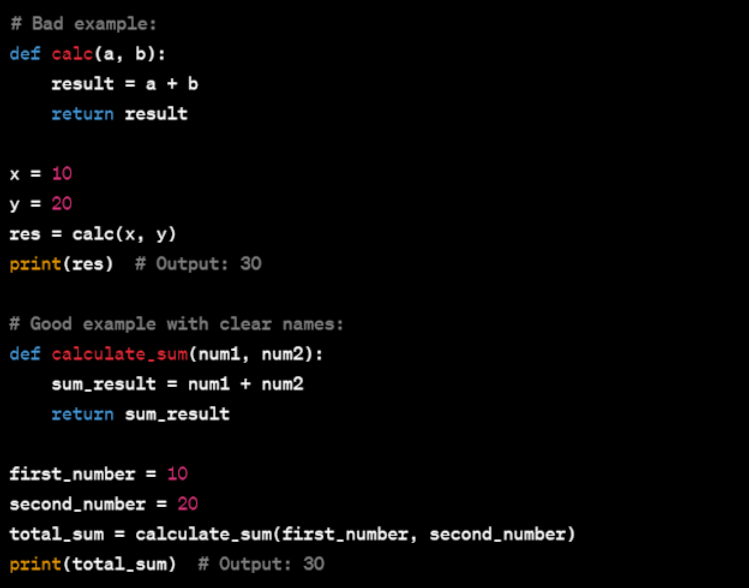
- Clear names for variables and functions:
Don’t hesitate to use long but descriptive names for variables and functions. This makes your code more readable and understandable.
- Consistent coding style:
Adhere to a consistent coding style throughout the project. This could be a style defined in a style guide document, such as PEP 8 for Python or the Google Style Guide for Java.
- Breaking code into functions and classes:
Divide your code into small functions and classes, each responsible for a specific task. This simplifies testing, debugging, and maintaining the code.
- Avoiding excessive comments:
Clean code should be self-explanatory. Avoid unnecessary commenting and carefully choose the comments that are truly necessary to explain complex issues.
- Regular refactoring:
Regularly review and improve your code. Refactoring helps remove code duplication, improve readability, and structure.
- Code testing:
Writing tests helps ensure that your code works correctly and allows you to quickly identify and fix errors.
Conclusion
Clean code is not just a nice addition to your project; it’s a necessity. It makes your development more efficient, reduces the likelihood of errors, and makes code maintenance easier in the future. By following the best practices of writing clean code, you can make your code more understandable and convenient to work with for both yourself and other developers.